These five keychain concepts compress whole stories into palm-size scenes. A turtle in a beret paints at an easel of shell and brush, a penguin in a lighthouse hat carries a glowing lantern, a white cat sleeps on a crescent moon in a starry nightcap, a hedgehog-shaped cottage shelters a tiny bunny, and a frog tends potted plants inside a vine-covered greenhouse. All images are AI-generated concept illustrations for inspiration, not photos of finished handmade pieces.
What makes these pieces storybook-like is the second element: each figure comes with a setting or tool that implies a before and after – a painting in progress, a path being lit, a dream underway, a door answered, a garden watered. One object turns a character into a scene.
A painter turtle with beret and palette
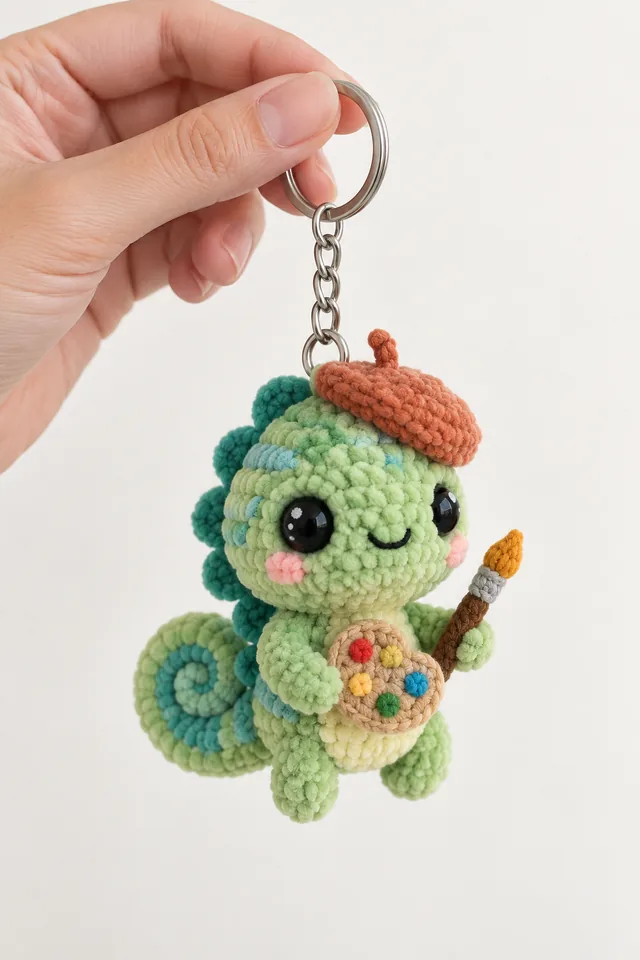
The painter turtle is the most artistic scene of the five. A bright green turtle with a teal spiral shell, big eyes and an orange beret holds a wooden palette dabbed with paint colors in one flipper and a fine brush in the other.
The beret and palette are the two universal signs of an artist, so the story reads instantly: the turtle is midway through a painting of, presumably, its own shell. The warm orange beret against the cool green body is a complementary color lesson in itself.
For a mood board, the turtle demonstrates profession-plus-prop shorthand. Two objects – palette and brush – establish an entire identity, and the same body could become any other trade by swapping the pair.
Against the gardener frog, the turtle works alone on art while the frog tends living things – two kinds of making. The image is an AI-generated concept, inspiration only, with no pattern implied.
A lighthouse-keeper penguin with a lantern
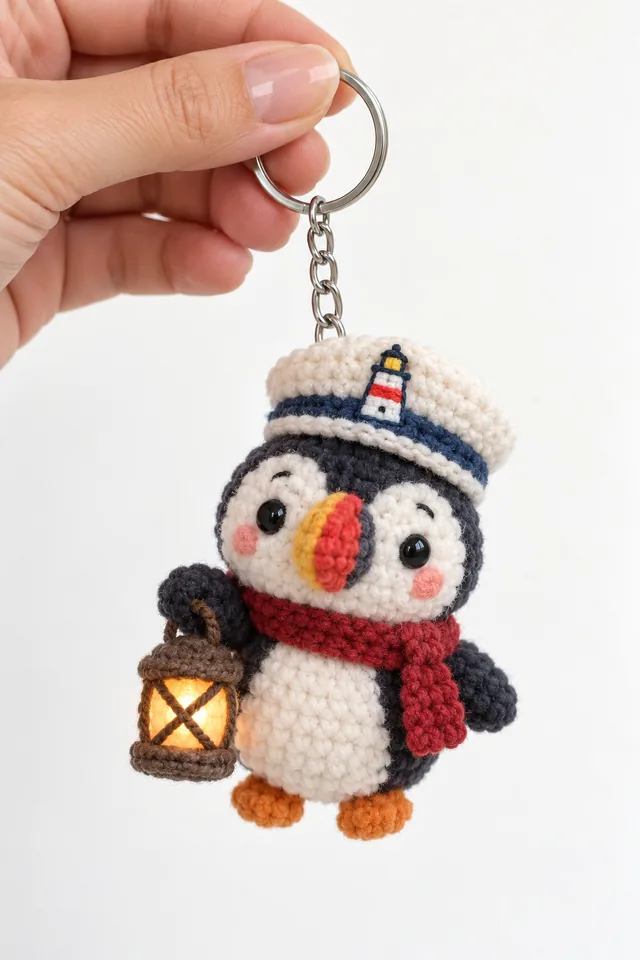
The penguin keeper is the most atmospheric of the five. A black-and-white penguin with orange feet wears a fluffy white cap stitched with a tiny red-and-white lighthouse, a thick red scarf, and holds a brown lantern whose warm light glows through crocheted panes.
The hat is the storytelling feat: it compresses an entire lighthouse into a badge, declaring the penguin's job in one glance. The glowing lantern adds the second layer – the keeper is on duty, lighting the way through a dark that we can imagine off-frame.
For a mood board, the penguin shows how architecture can shrink into headwear. A windmill cap, a cottage hood, a ship hat – miniature buildings worn as badges instantly assign a role and a landscape.
Compared with the sleeping moon cat, the penguin is awake and working while the cat dreams – two halves of one storybook night. The image is an AI-generated concept for inspiration, not a photograph of a finished piece.
A cat asleep on a crescent moon
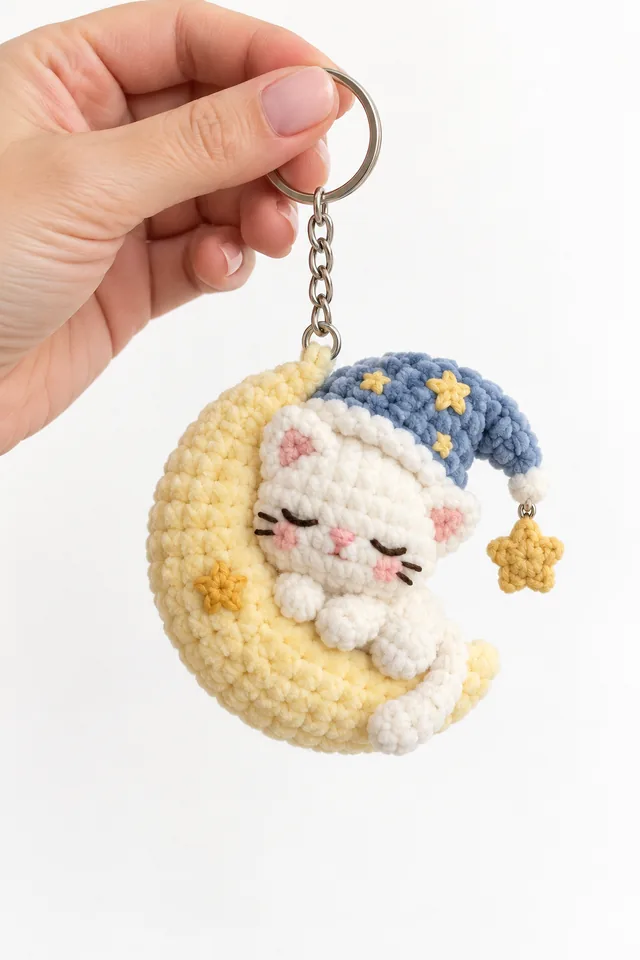
The moon cat is the dreamiest figure of the set. A fluffy white cat with closed eyes and pink cheek marks sleeps curled along a plump yellow crescent moon, wearing a blue nightcap dotted with yellow stars whose tassel ends in a tiny dangling star charm.
Every element reinforces sleep: the closed eyes, the nightcap, the moon itself, the star dangling like a dream about to drop. The cat's white fur against the yellow crescent keeps the palette soft and nocturnal rather than dark.
For a mood board, the moon-cat formula – resting animal plus celestial body – is endlessly variable: a fox on a star, a bunny on a cloud, an owl on a crescent. The celestial object doubles as bed and symbol.
Set beside the working penguin, the cat completes the night-shift story: someone keeps the light while someone else sleeps by it. The image is an AI-generated concept, inspiration only.
A hedgehog cottage with a bunny inside
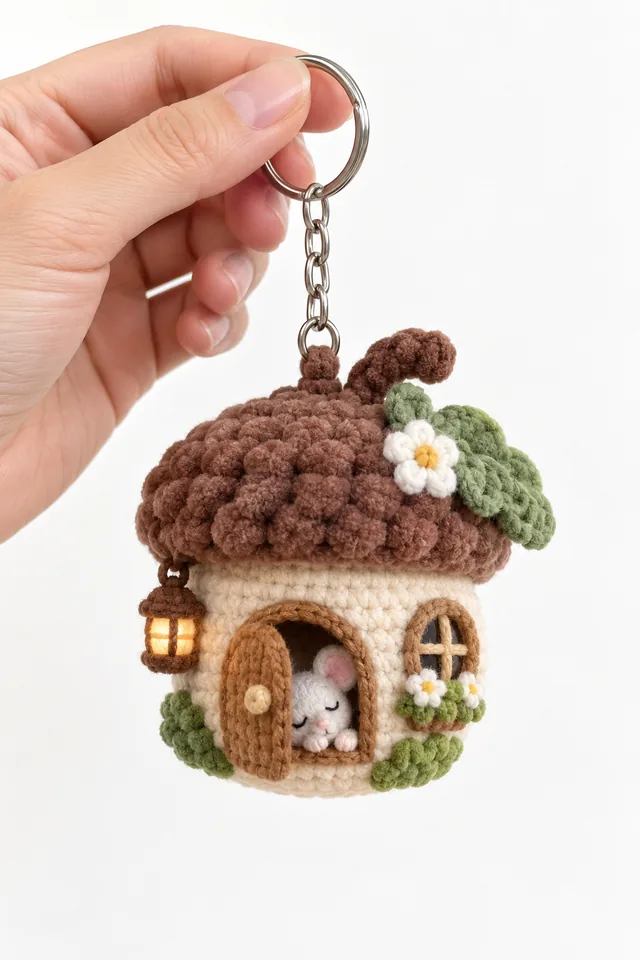
The hedgehog house is the most architectural piece of the five. A cream cottage with a brown shingled roof of hedgehog spines, tiny windows and a round wooden door stands on a green base, and a small white bunny peeks out from the doorway.
The double reading is the delight: it is both a hedgehog – spines, face suggested by the roofline – and a house, complete with a resident. The bunny in the doorway adds scale and turns the object into an inhabited home rather than a model.
For a mood board, the house shows animal-as-architecture: a snail shell, a pumpkin, a mushroom or a hedgehog back can all become dwellings with the addition of a door and one small window.
Against the greenhouse, the hedgehog house is a private home while the greenhouse is a public workspace for plants – two kinds of shelter in the same storybook world. The image is an AI-generated concept, inspiration only.
A frog gardener inside a greenhouse
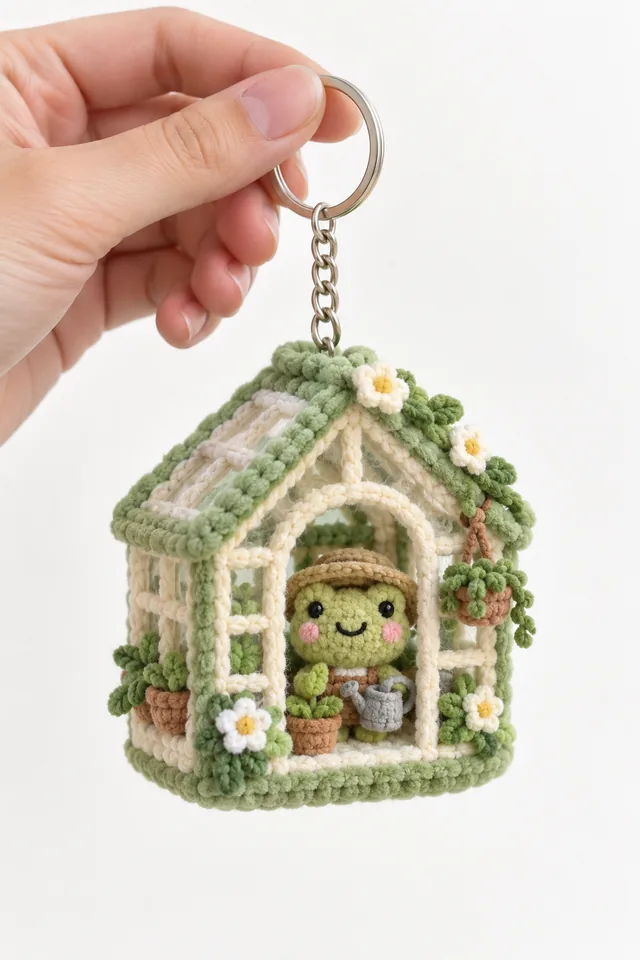
The greenhouse is the most detailed scene of the set. A green frog in a straw hat stands inside a cream-and-green glasshouse framed with vines and leaves, watering a row of tiny potted plants with a gray watering can, daisies dotted around the base.
The piece layers three scales – building, gardener and plants – into one miniature, and the transparent look of the greenhouse panes keeps all three visible at once. The watering can mid-pour freezes the scene in the middle of an action.
For a mood board, the greenhouse demonstrates diorama thinking: a frame plus an interior scene tells a bigger story than any single figure, at the cost of more parts. It is the natural next step after mastering single characters.
Compared with the solo painter turtle, the frog shares its space with living things it cares for – art versus garden as the two gentle professions of the set. The image is an AI-generated concept for inspiration only.
One prop, one whole story
Each of the five scenes relies on a single storytelling device: the turtle's palette, the penguin's lantern, the cat's nightcap, the hedgehog's doorway, the frog's watering can. One prop, placed well, implies an entire life around the figure.
When designing storybook keychains, resist adding more than one scene element. The charm of the format is compression – a whole world the size of a key ring, readable in a single glance.
All five images are AI-generated concept illustrations. They suggest characters, scenes and palettes, but they are not photographs of finished crocheted pieces and contain no patterns or instructions. Use them as a springboard for your own storybook keychain mood board.
Read how we present crochet inspiration or send a suggestion or correction.