These five miniature concepts turn everyday objects into keychain characters. A matryoshka doll nests in green and brown, a tiny microwave heats a bowl of ramen, a desk fan blows a swirl of leaves, a noodle cup wears its toppings proudly, and a two-scoop ice cream cone stands on its own crocheted base. All images are AI-generated concept illustrations for inspiration, not photos of finished handmade pieces.
Object-with-a-face is one of the most reliable formulas in miniature crochet-look design, and this set shows its range: cultural icon, appliance, seasonal scene, food and dessert. The face placement and the one exaggerated detail – leaves, noodles, scoops – do all the work.
A matryoshka doll keychain
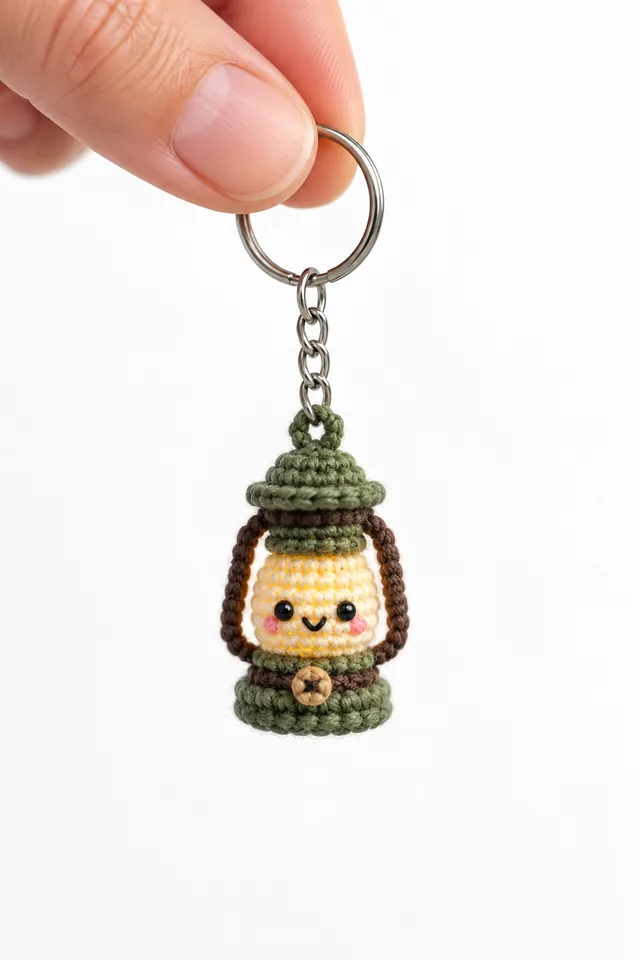
The matryoshka is the most iconic shape of the five. A tiny doll with a round painted-look face, rosy cheeks and a dark green headscarf rimmed with brown sits above a flared green base, a small flower medallion at the front.
The silhouette is instantly recognizable: pear-shaped body, scarf framing the face, no limbs needed. That simplicity is what makes it perfect for keychain scale – the cultural reference carries the design without a single accessory.
For a mood board, the doll shows how a familiar folk form translates directly into miniature. Changing only the scarf color produces a whole family of dolls, making it a natural series starter.
Against the ramen microwave, the doll is traditional and static while the microwave is modern and animated by its tiny meal. Both rely on cultural shorthand. The image is an AI-generated concept, inspiration only.
A microwave heating a bowl of ramen
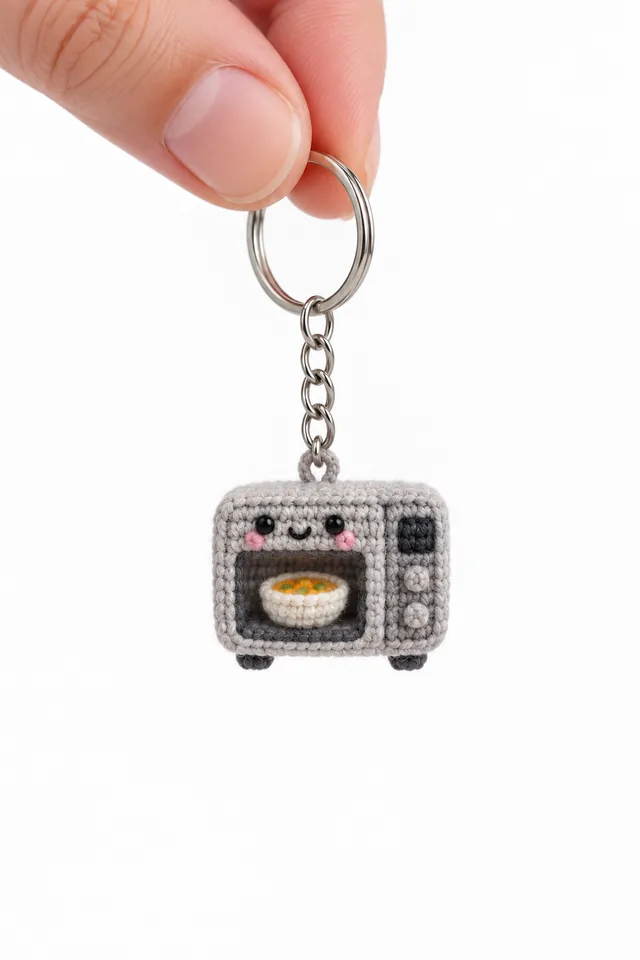
The microwave is the funniest object of the set. A soft gray box with a dark door window, button panel and little feet smiles gently while a full bowl of ramen with egg and toppings glows inside the window.
The gag is the window: it turns an appliance into a diorama. The ramen bowl inside is the detail that makes people look twice, and the cheerful face on a machine that normally has none gives it instant charm.
For a mood board, the microwave demonstrates the see-through trick – any appliance with a door, window or screen can display a second tiny scene inside, doubling the storytelling at no extra size.
Compared with the self-contained matryoshka, the microwave contains something else, making it a two-layer design. Nested content is a powerful miniature device. The image is an AI-generated concept for inspiration, not a finished piece.
A desk fan blowing a swirl of leaves
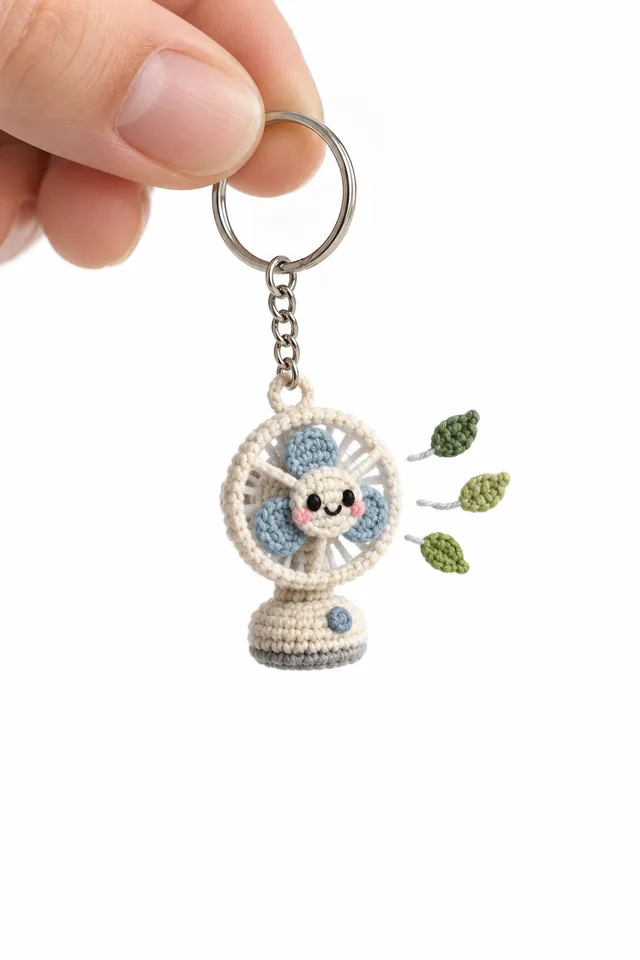
The desk fan is the most dynamic concept of the five. A cream-and-silver fan with a round smiling face inside its cage spins soft blue blades, while three tiny green leaves float away in a curve beside it.
The floating leaves are the genius touch: they show motion in a still object. Without them the fan is just an appliance; with them it is a breeze caught in yarn, and the composition gains a diagonal energy nothing else in the set has.
For a mood board, the fan proves that detached elements – leaves, petals, bubbles – can depict action around a static figure. This is the cheapest animation trick in miniature design and one of the most effective.
Against the upright ice cream cone, the fan is all movement while the cone is all stillness, giving the collection a rhythm of action and rest. The image is an AI-generated concept, inspiration only.
A ramen cup with all the toppings
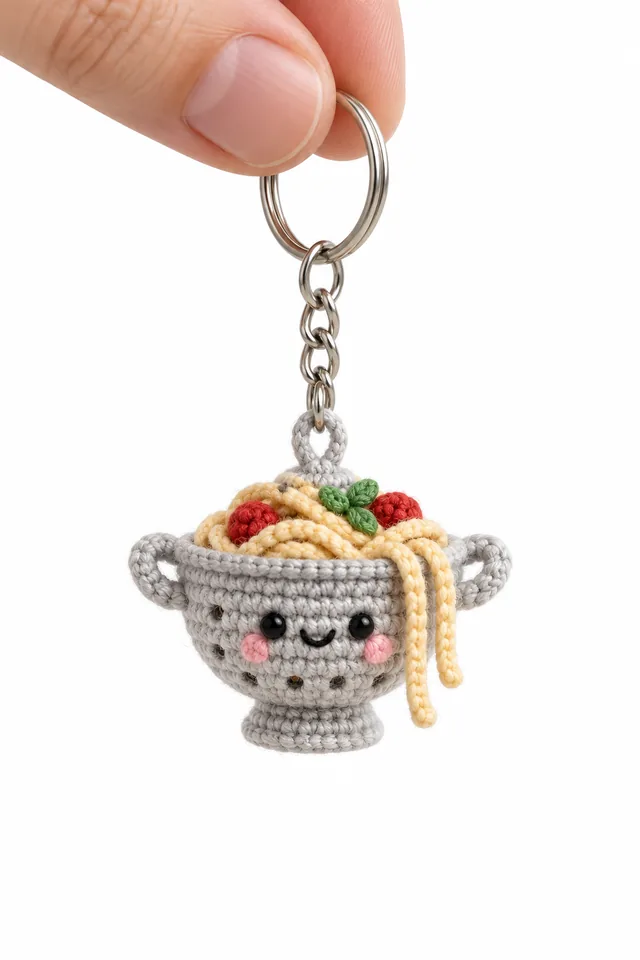
The ramen cup is the most appetizing of the five. A gray cup with a handle and a happy spotted face overflows with yellow noodles, a halved egg, red tomatoes and green herbs, steam replaced by crocheted loops.
The toppings are piled deliberately high so they read at small size: red, yellow and green against the neutral cup. The dangling noodles over the rim break the silhouette and add the casual abundance of real street food.
For a mood board, the cup shows the value of overflow – food charms benefit from toppings that spill past the container's edge, because the mess is what signals deliciousness.
Compared with the microwave hiding its ramen behind glass, the cup displays everything proudly. Two philosophies of food design: revealed versus enclosed. The image is an AI-generated concept for inspiration only.
A two-scoop ice cream cone
The ice cream cone is the most vertically composed of the five. A brown waffle-textured cone with a smiling face supports a caramel middle scoop and a cream top scoop finished with a small white bow.
The three stacked colors – chocolate, caramel, vanilla – give the piece a dessert-shop classicism, and the bow elevates it from snack to gift. The waffle texture on the cone adds pattern without any extra parts.
For a mood board, the cone demonstrates stacking as structure: two or three rounded tiers with faces on the bottom tier make instant characters, from ice creams to cakes to snowmen.
Set beside the overflowing ramen cup, the cone is tidy and architectural where the cup is abundant and casual. Together they show the two moods of food charm design. The image is an AI-generated concept, inspiration only.
Everyday objects, pocket-size faces
The five miniatures share one rule: take an object everyone already knows, give it eyes, and add exactly one detail that makes the scene – ramen in the window, leaves in the air, toppings over the rim. Recognition does the heavy lifting; the face adds the charm.
When designing object keychains, choose silhouettes that read at an inch high and resist adding more than one storytelling element. The miniature scale rewards clarity, not clutter.
All five images are AI-generated concept illustrations. They suggest characters, palettes and scene details, but they are not photographs of finished crocheted pieces and contain no patterns or instructions. Use them as a springboard for your own miniature object mood board.
Read how we present crochet inspiration or send a suggestion or correction.