Flowers do more than decorate these five miniature amigurumi concepts. They draw attention to a face, extend a silhouette, create a gesture or turn a character into a small scene. An ivory owl feels composed and ceremonial; a lavender jellyfish suggests movement; a sleeping pink dragon belongs to an entire imagined garden.
The collection shares a soft, warm background and a hand-held presentation, but its strongest ideas come from the differences between the characters. Look at where each floral arrangement sits, which colors repeat, and how much space the decoration occupies. The hands suggest a miniature mood; they are not a reliable guide to finished dimensions.
An ivory owl with a flower-side crown
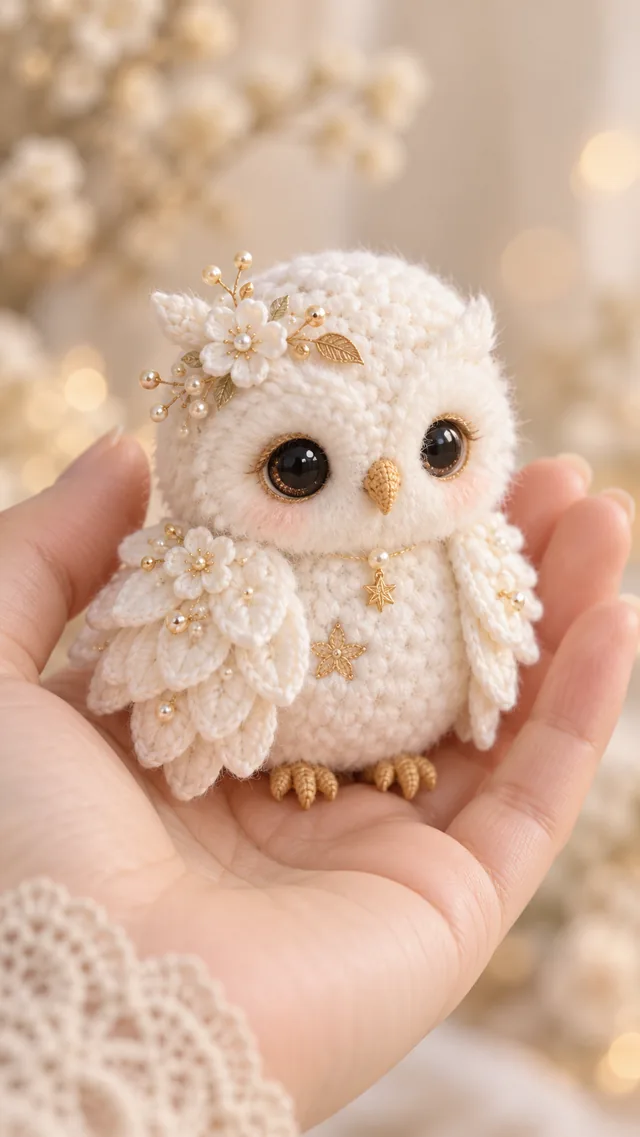
The owl is the most restrained character in the group. Its rounded ivory body and broad face create a clear center, while the large dark eyes provide almost all of the strong contrast. Small white flowers cluster to one side of the head and continue around the shoulder area. This off-center placement keeps the decoration from competing evenly with both eyes.
Gold-colored accents warm the near-white palette without changing its quiet character. The beak, feet and fine decorative sprays form a scattered visual rhythm rather than one large bright patch. Layered wing shapes add interest along the sides, where a completely smooth outline would feel more formal. The concept balances a simple body with detailed edges.
Choose this direction for an ivory-and-champagne inspiration board where expression matters more than a colorful costume. A blush or pale sage accent could shift the mood, but the useful feature to preserve is the open face. Filling every empty area with flowers would weaken the contrast between the calm central shape and its ornate border.
A lavender jellyfish with trailing floral strands
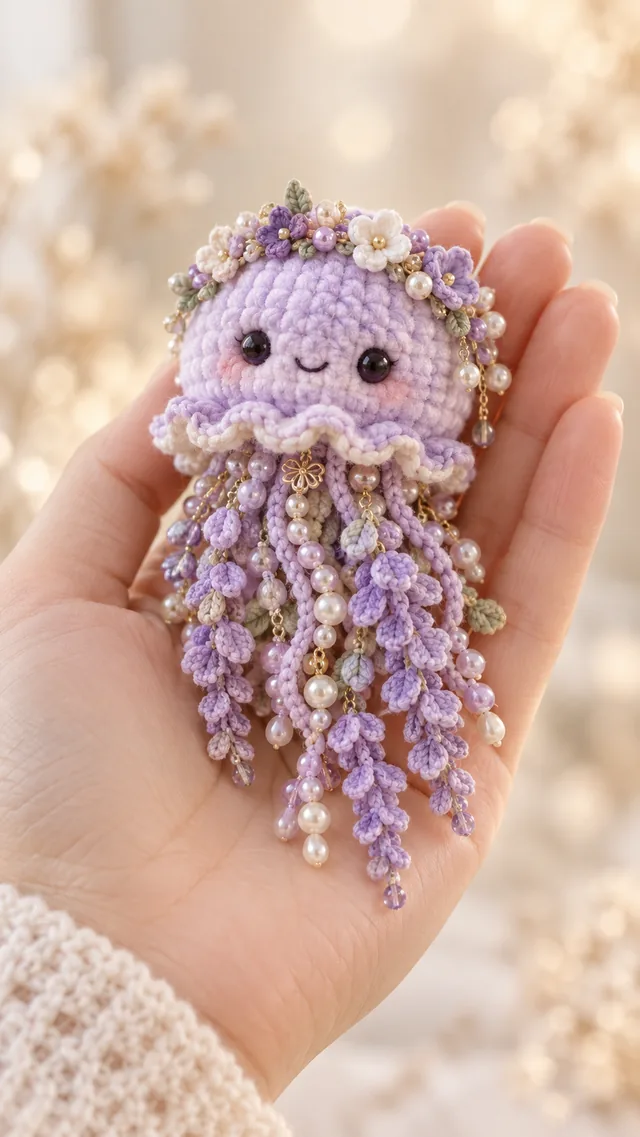
The jellyfish translates the floral theme into movement. Its lavender dome has a small smiling face and a scalloped lower edge, then opens into a curtain of twisting strands. A mixed crown of pale blossoms runs across the top. Unlike the owl, which gathers most of its visual weight into one rounded body, this character stretches the eye downward.
Lavender repeats from the head into the hanging shapes, connecting two very different textures. Cream flowers and pearl-like dots interrupt that purple field with little flashes of light. The strands vary in their apparent length and curl, giving the lower half a loose, uneven outline. These are visual impressions from a generated image, not evidence of workable crochet construction.
This is the strongest reference for a pastel fantasy mood board with flowing shapes. Keep the crown relatively compact if the hanging strands are the feature you love most. A cooler lilac-and-white palette would emphasize an airy feeling; warmer peach blossoms would connect the creature more closely to the other garden-inspired characters in this collection.
A cream goat framed by tiny daisies
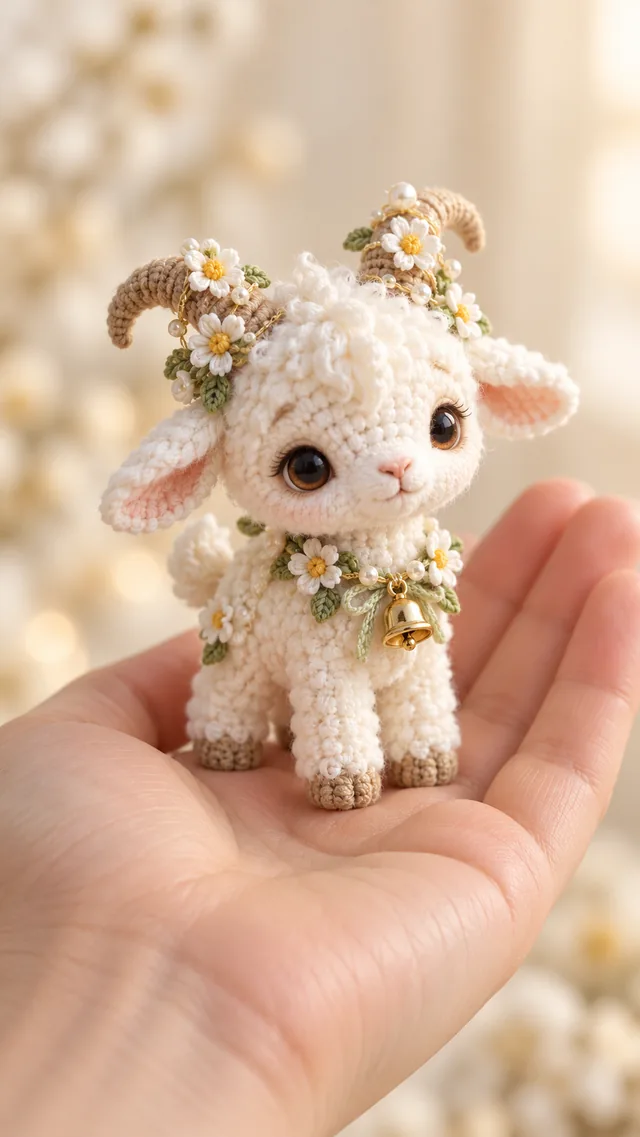
The little goat uses recognizable animal features as anchors for its flowers. Curved tan horns rise above a textured cream head, and small daisy-like blossoms nestle around their bases. Wide ears extend to either side, leaving a gentle face visible between them. The flowers appear to belong to the outline rather than sitting on top as an unrelated accessory.
A second botanical cluster forms a collar below the face. Its green leaves and gold-colored bell create a lower focal point that balances the crown. Cream and tan keep the character grounded, while the yellow flower centers repeat the warmth of the bell. The short, upright stance feels more alert than the sleeping dragon and less theatrical than the jellyfish.
For a meadow-inspired collection, notice the value of separating the flowers into two smaller groups. The gap between the crown and collar protects the expression from visual clutter. You could explore white daisies against a muted peach or oatmeal character in a color study, while keeping the ears and horns easy to distinguish from the foliage.
A peach mouse carrying a miniature bouquet
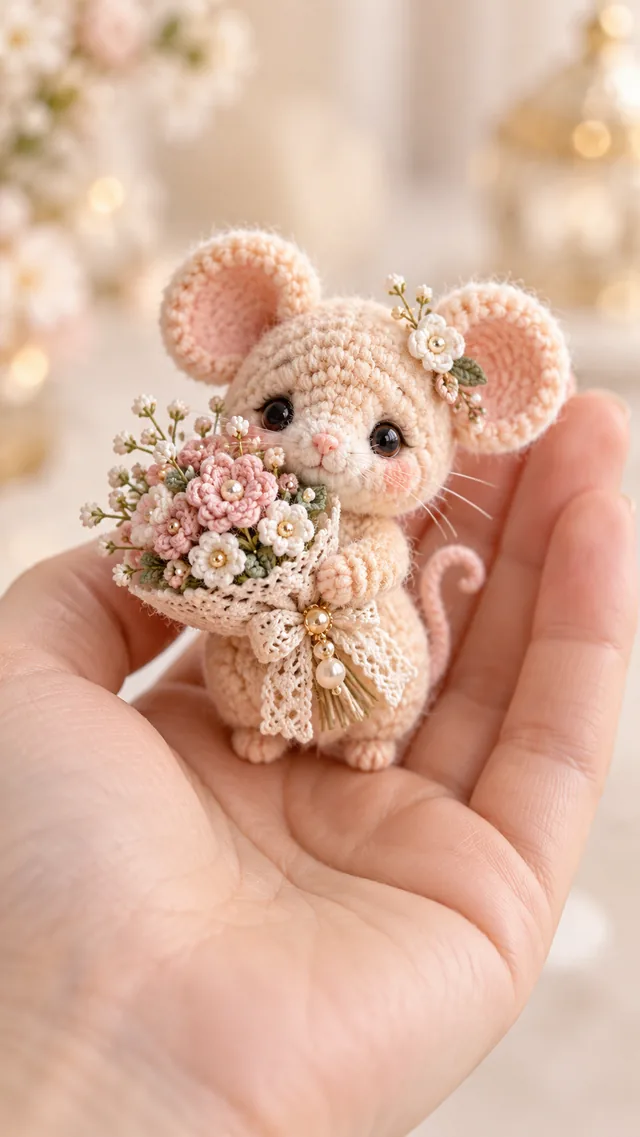
The mouse brings a gesture into the collection. Its pink-and-white bouquet is held in front of the body, suggesting an offering or a visit rather than a decorative crown alone. Large round ears keep the character recognizable above the flowers. One small blossom near an ear links the face to the bouquet without surrounding the whole head.
The peach body, pink inner ears and muted rose flowers sit close together in color, producing a soft overall impression. Cream details in the outfit and blossoms stop the bouquet from becoming a single pink mass. The arrangement leans slightly to one side, allowing the face and one eye-catching ear to remain clear. A thin curved tail is a quieter detail at the edge.
Use this concept when the story of the character matters as much as its outline. The bouquet is the main prop, so a mood-board variation could change the flower colors while leaving the clothing understated. Compared with the goat, which wears its botanical details, the mouse appears to interact with them. That difference makes the image feel more like a moment.
A sleeping pink dragon in a floral nest
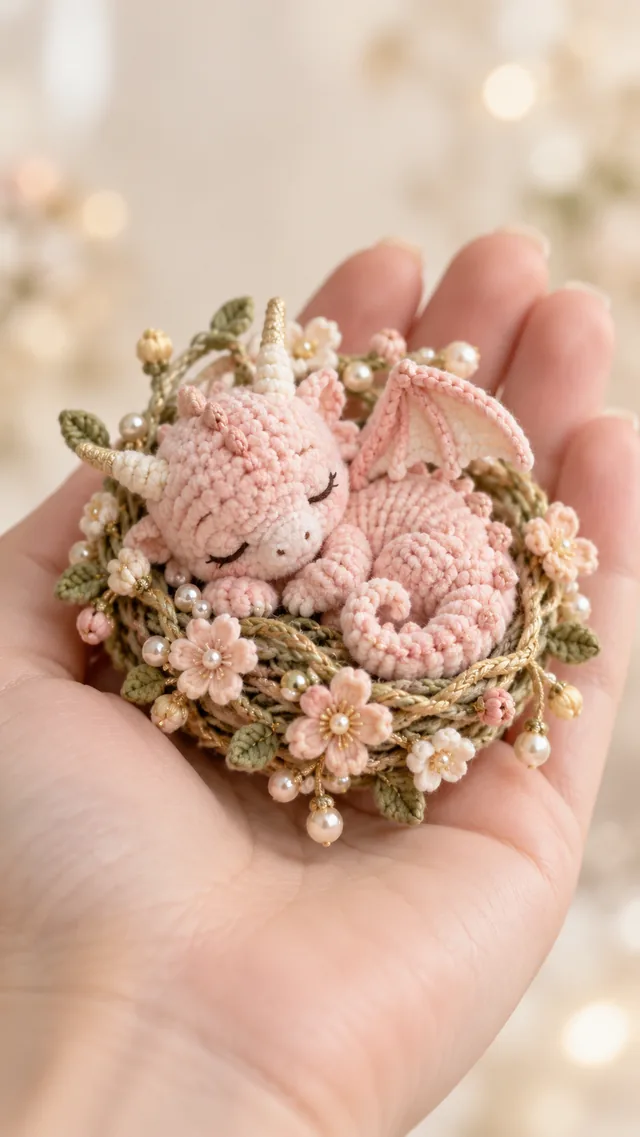
The sleeping dragon expands the idea from a decorated figure into a small environment. Its curled pink body rests inside a ring of flowers, leaves and nest-like strands. Closed eyes and tucked limbs give it a restful expression, while the wing shapes and green head details maintain a recognizable fantasy identity. The botanical frame is part of the whole composition.
Pink repeats across the body and blossoms, but muted green appears in enough places to break up that repetition. Leaves follow the outer curve of the nest, drawing attention back toward the sleeping face. The wings introduce sharper triangular shapes among the round flowers and soft body. Without those contrasts, the scene could read as a pile of pastel textures.
Choose this reference for a tiny enchanted-garden mood rather than a single upright character. Its wider composition needs breathing room around the outline to make the nest readable. When comparing possible palettes, try thinking of the flowers as the setting and the dragon as the focal point. Adding stronger contrast everywhere would make it harder to preserve the quiet, enclosed atmosphere.
Choose the role of the flowers first
For a calm, face-led composition, start your mood board with the owl: its flowers remain at the edges of a simple ivory silhouette. For movement and an unexpected botanical setting, the jellyfish offers the strongest contrast, with a rounded top and a trailing lower half. The goat sits between those approaches, using two small floral groups to frame a recognizable face.
If you want a character to suggest a story, compare the mouse and the dragon. The mouse holds its flowers, making the bouquet part of an encounter. The dragon rests inside them, turning foliage into a setting. That distinction can help you decide whether you want your inspiration to emphasize a gesture or an atmosphere.
Across the five concepts, the quiet palette gives the small decorative details room to matter. Choose one main character color, one floral accent and a restrained supporting green when arranging a visual mood board. Keep the focus on the relationships you like, rather than treating an AI image as a construction reference or evidence of a finished crochet object.
Read how we present crochet inspiration or send a suggestion or correction.