These five plush concepts dress their animals entirely in flowers. A blue dog carries tiny blossoms on its floppy ears, a llama is frosted with lavender sprigs, a cream bear wears a collar of pink tulips, a bunny balances a flower-dotted hat between long ears, and a little green dragon sprouts lily-of-the-valley wings. All images are AI-generated concept illustrations for inspiration, not photos of finished handmade pieces.
What unites the set is placement: each figure uses a different part of the body as the garden bed – ears, back, neck, head and wings. Comparing the five shows how the same floral vocabulary can read as jewelry, costume or landscape depending on where it sits on the animal.
A blue dog with flowered ears
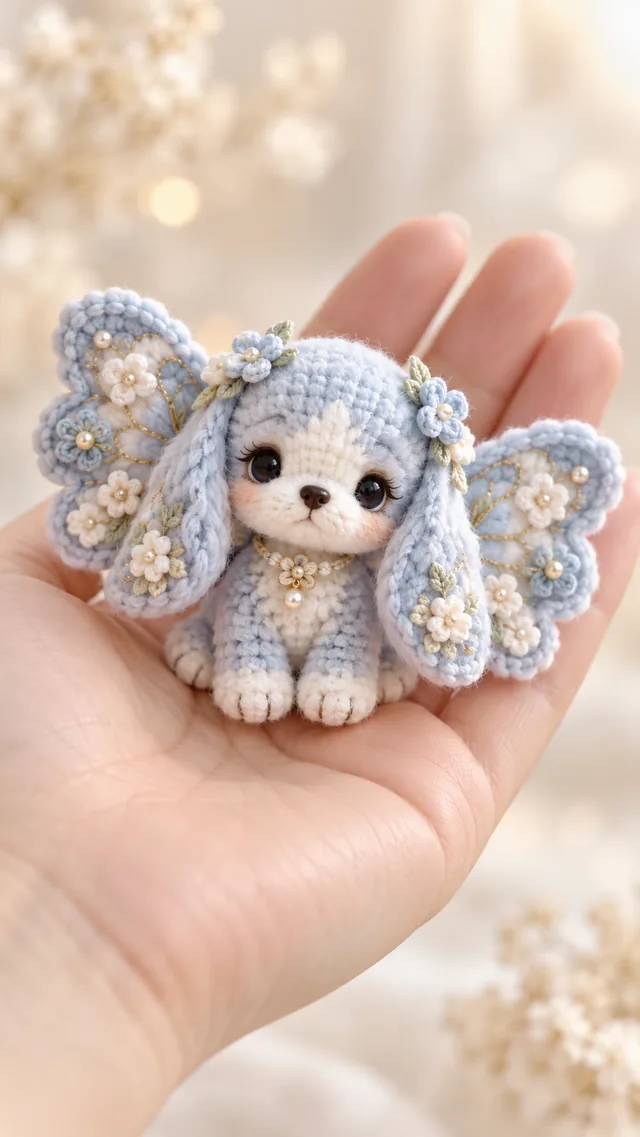
The blue dog is the softest entry in the set. A powder-blue puppy with a cream muzzle, dark eyes and very long floppy ears sits with its paws together, each ear patterned with tiny white blossoms like a printed fabric.
The floral ears are the whole design: they turn a simple puppy into a garden fairy's pet. Keeping the body one solid color lets the patterned ears carry all the detail, and the blue-and-white palette feels like spring sky after rain.
For a mood board, the dog demonstrates pattern-on-appendage. Ears, tails and wings are natural places for a second motif because they read as accessories even when made from the same material as the body.
Compared with the tulip-collared bear, the dog wears its flowers flat and all over, while the bear's blooms stand out in three dimensions. Both approaches are floral, one textile and one sculptural. The image is an AI-generated concept, inspiration only.
A lavender llama
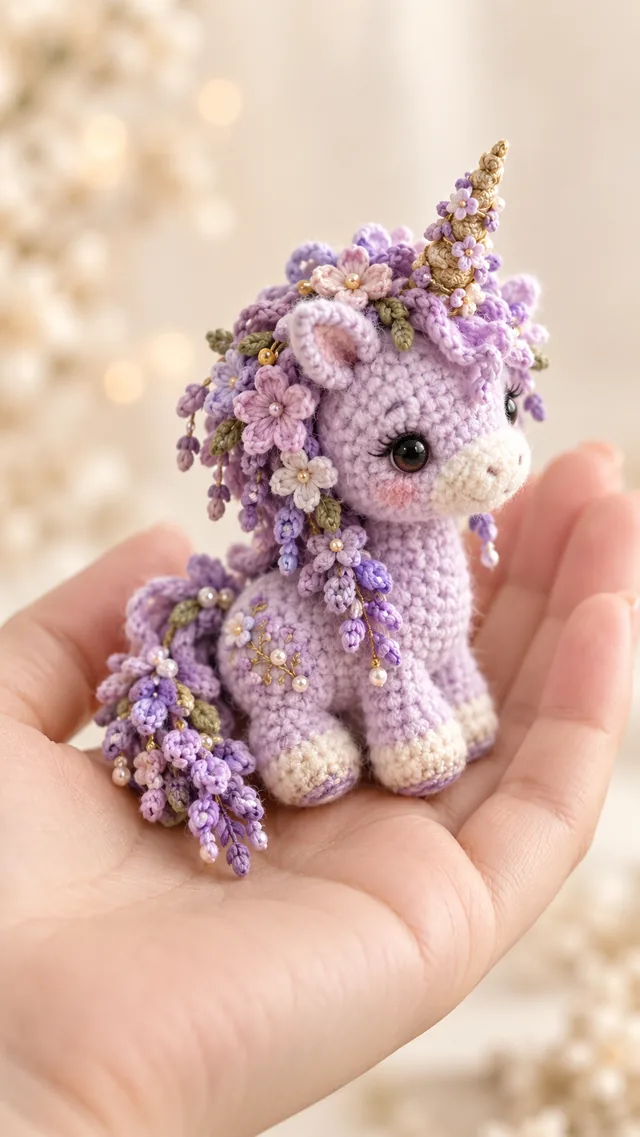
The lavender llama is the most lavishly decorated figure of the five. A lilac llama with a white muzzle is covered head to toe in tiny crocheted lavender sprigs, with a full mane and tail of purple blooms and one tall stalk rising from its head like a horn.
Here the flowers are not an accessory but the entire fleece: the llama is its own field of lavender. The monochrome purple palette works because value shifts – deep violet sprigs against pale lilac body – keep every layer readable.
For a mood board, the llama shows the total-coverage approach, best saved for one hero piece in a collection. Surrounded by simpler figures, it becomes the centerpiece; surrounded by equally busy pieces, it would overwhelm.
Against the single-accent dog, the llama represents maximalism versus minimalism. A floral series benefits from having both poles. The image is an AI-generated concept for inspiration, not a photograph of a finished piece.
A cream bear with a tulip collar
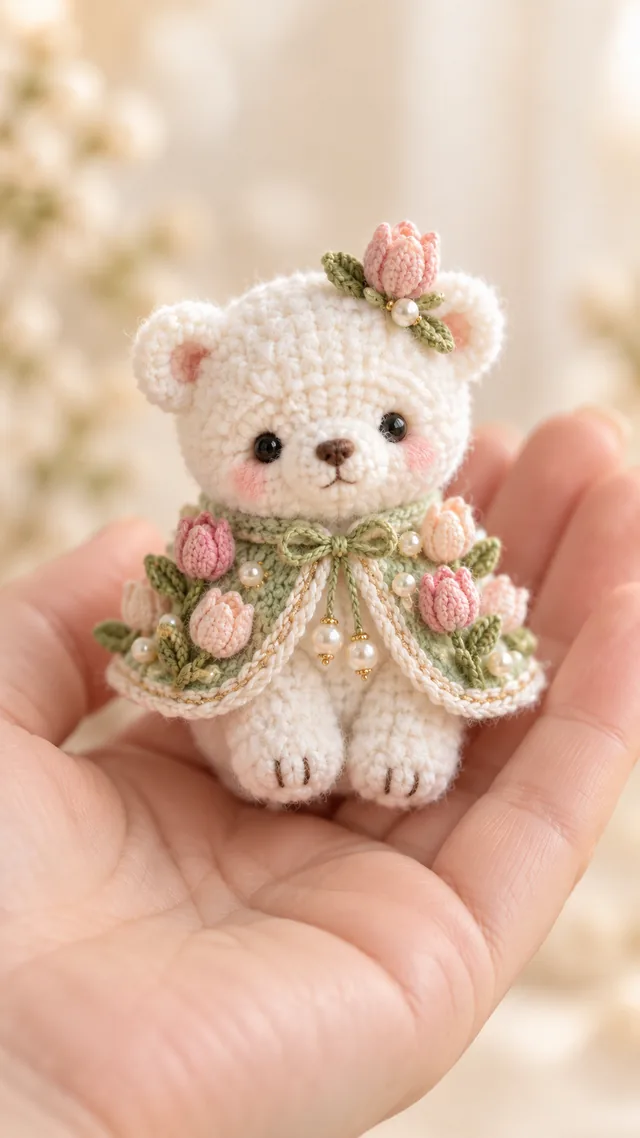
The tulip bear is the most formally dressed of the five. A cream-colored bear with a single pink tulip bud on its head wears a wide green collar of leaves and buds that frames its face like a ruff, with tiny pearls catching the light at the center.
The collar borrows from Elizabethan ruffs and flower crowns at once, giving the bear a ceremonial, gift-ready air. The pink-and-green palette against the neutral body is classic spring, and the single bud on top repeats the collar's motif in miniature.
For a mood board, the bear demonstrates framing: a ring of detail around the face draws the eye exactly where the designer wants it. Any small figure with a plain face can be elevated this way.
Compared with the all-over llama, the bear uses flowers sparingly and symmetrically, proving restraint can be as memorable as abundance. The image is an AI-generated concept, inspiration only, with no pattern implied.
A pink bunny with a flower hat
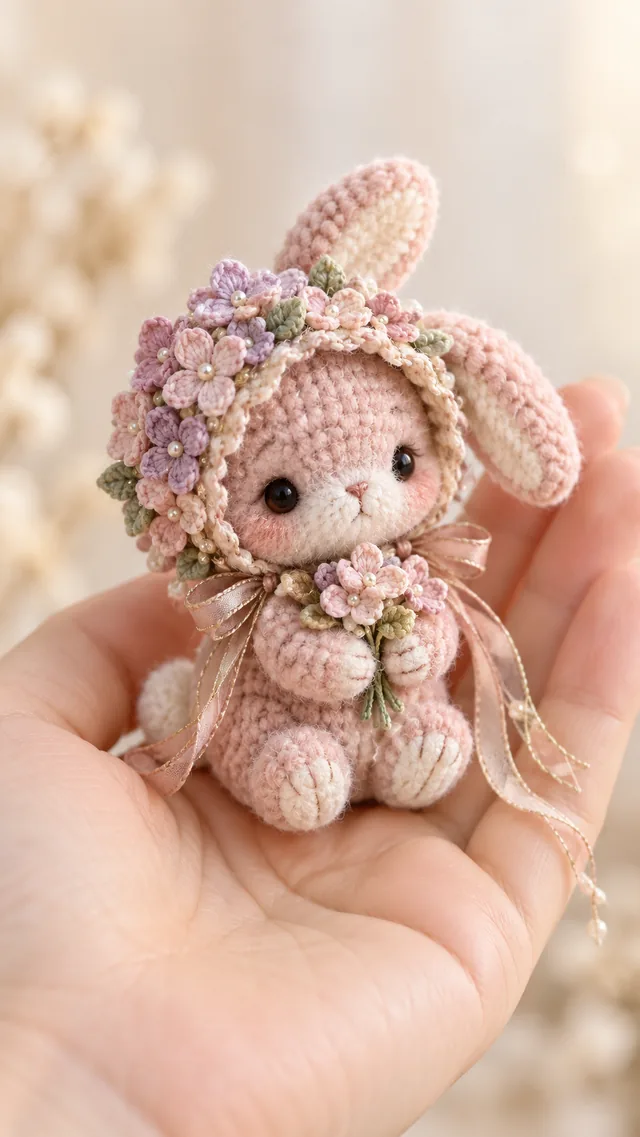
The flower-hat bunny is the sweetest figure of the set. A blush-pink bunny with long floppy ears wears a rounded hat completely covered in tiny purple and pink blossoms, and clutches a small matching bouquet tied with ribbons.
The hat works as a dome of texture that contrasts with the smooth body, and the bouquet gives the bunny a purpose – it is a flower seller or a guest at a garden party. Ribbons trailing from the hat soften the silhouette.
For a mood board, the bunny shows how a hat can carry the entire theme while the body stays classic. This is the most adaptable formula of the five: change the hat's flowers and the same bunny serves any season or occasion.
Set against the lily-of-the-valley dragon, the bunny is a gardener in a garden, while the dragon is the garden itself. Two roles for floral detail, both charming. The image is an AI-generated concept for inspiration only.
A green dragon with lily-of-the-valley wings
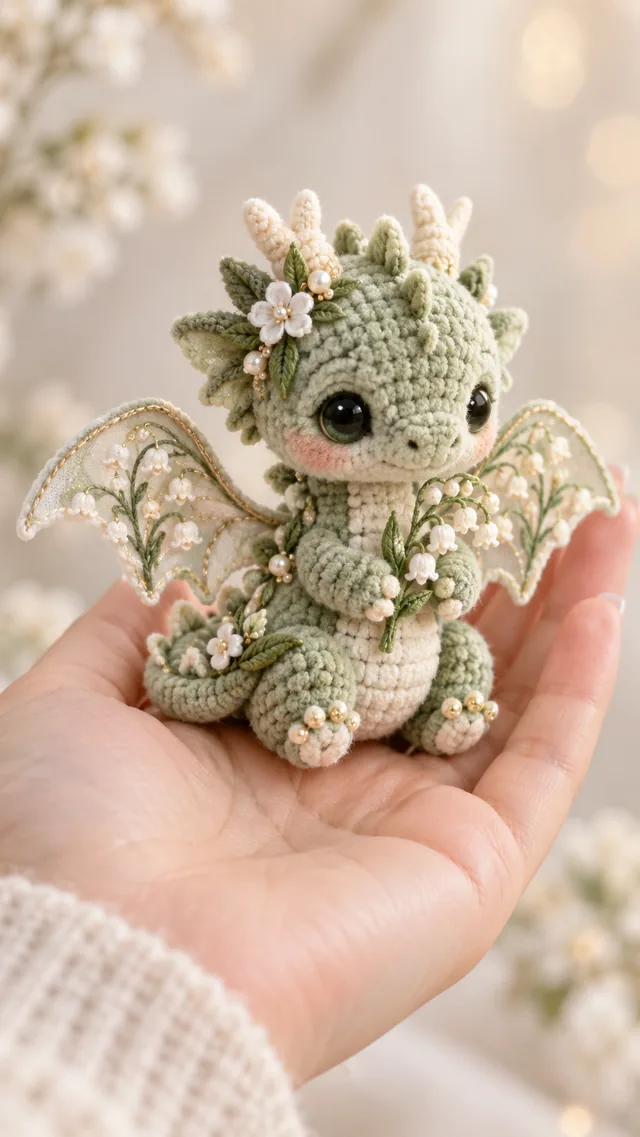
The lily dragon is the most fantastical of the five. A sage-green baby dragon with big dark eyes, tiny horns and soft belly plating wears wings and a head crest made of white lily-of-the-valley sprays, each bell flower dotted along the wing bones.
The choice of flower is inspired: lily-of-the-valley already grows in sprays, so the blossoms map naturally onto the wing's structure. The white bells against green wings read as both foliage and flower, blurring plant and creature.
For a mood board, the dragon demonstrates structural floral design, where the flower follows the engineering of the part it decorates. This approach suits wings, tails and manes better than flat appliqué.
Compared with the flower-hat bunny, which wears its theme as costume, the dragon embodies it. Together the five figures chart a path from floral accent to floral identity. The image is an AI-generated concept, inspiration only, with no construction details implied.
Wear the garden
The five figures move floral detail across the body: printed on ears, grown as fleece, framed as a collar, piled on a hat and engineered into wings. The same small blossoms become textile, landscape, jewelry, costume and anatomy depending on placement.
When planning a floral amigurumi series, decide first where the garden lives on each figure – one collection that visits every placement feels richer than five repeats of the same idea.
All five images are AI-generated concept illustrations. They offer ideas for characters, palettes and floral placement, but they are not photographs of finished crocheted pieces and include no patterns or instructions. Use them as a springboard for your own botanical plush mood board.
Read how we present crochet inspiration or send a suggestion or correction.