These five plush concepts celebrate the classic kawaii amigurumi formula: a round body, a sweet face and one carefully chosen accessory. A teddy bear wears a chocolate-brown bow, a white cat sleeps curled on a yellow crescent moon, a pink bunny holds a single daisy, a yellow duckling hides under a frog hat, and an orange fox wraps up in a cream scarf. All images are AI-generated concept illustrations for inspiration, not photos of finished handmade pieces.
Each figure follows the same quiet recipe – soft neutral background, gentle expression, one accent – which is exactly why the small differences matter so much. The accessories do the storytelling: a bow signals a gift, a moon signals bedtime, a daisy signals spring. When comparing the five, notice how one prop is enough to give each plush a complete personality.
A teddy bear with a chocolate bow
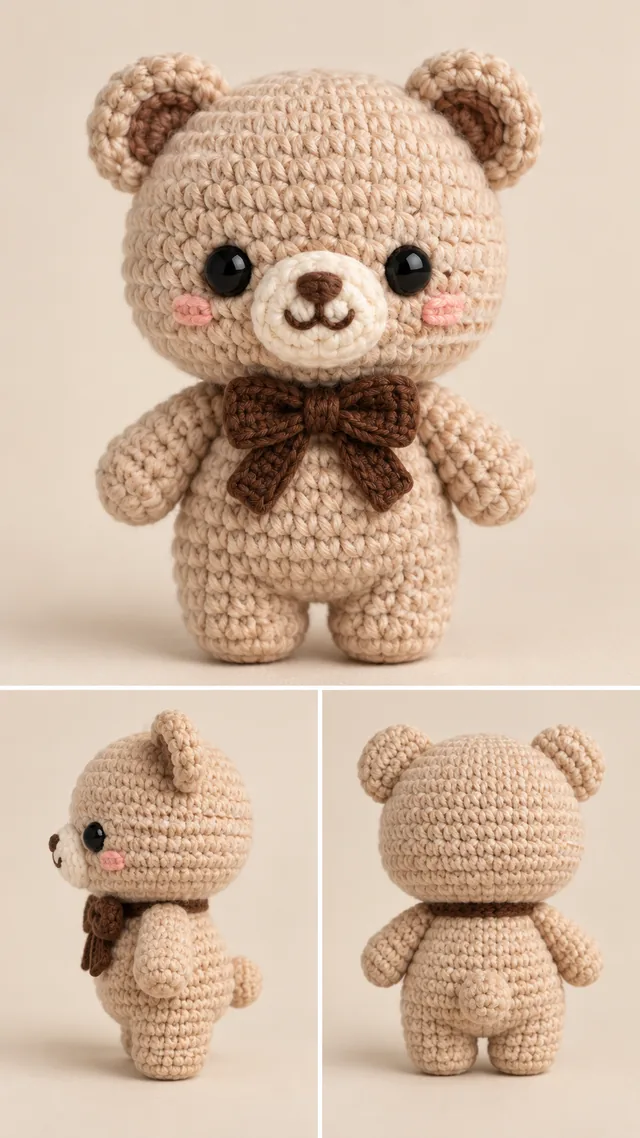
The bow-tied teddy is the most traditional plush of the five. A warm beige body with a cream muzzle, round ears and small black eyes stands upright, anchored by a generous chocolate-brown bow at the neck. The concept sheet shows the figure from three angles, emphasizing how the simple silhouette stays charming from every side.
The bow is the entire design statement, and its scale is what makes it work: it is deliberately oversized, nearly as wide as the head. That exaggeration turns a standard teddy into a gift-ready character. The two-tone palette of beige and chocolate feels warm without needing any additional decoration.
For a mood board, this teddy demonstrates the power of one oversized accessory. Ears, paws and muzzle stay plain so the bow can dominate. The same body could wear a heart, a flower or a holiday ribbon, and each swap would create a completely different occasion plush.
Compared with the fox in its scarf, the teddy is formally dressed while the fox is bundled for weather. Both use a single neck accessory, but one suggests ceremony and the other comfort. The images are AI-generated concepts for inspiration only, not patterns.
A white cat asleep on a crescent moon
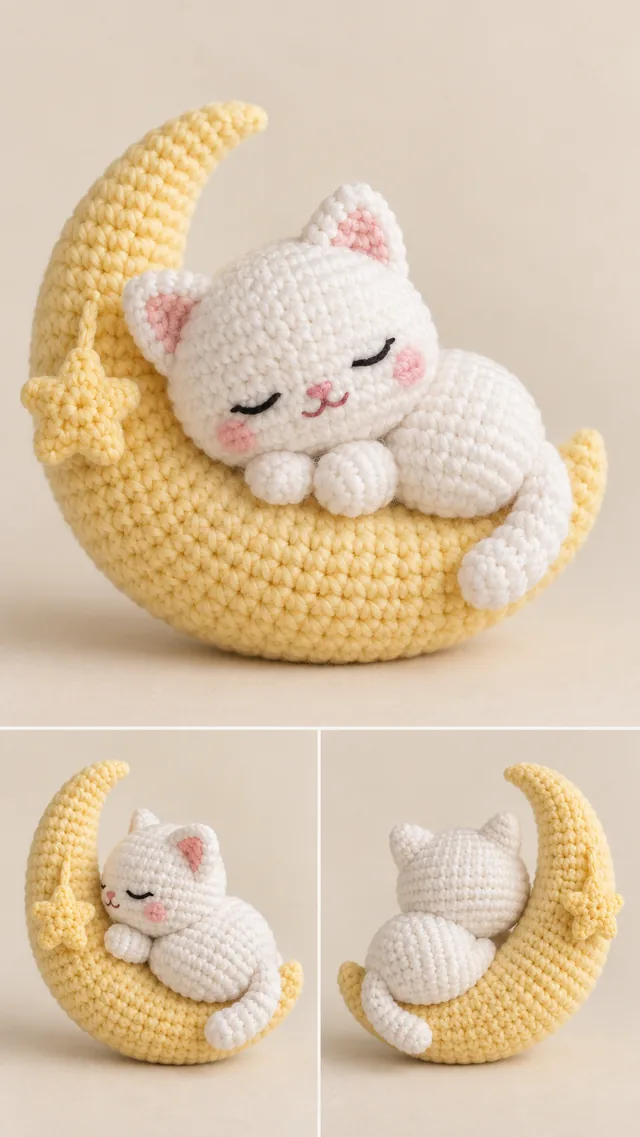
The moon cat is the most peaceful concept in the set. A fluffy white cat with pink inner ears, closed eyes and a tiny smile lies curled along the inner curve of a plump yellow crescent moon. The cat's tail drapes over the moon's lower horn, and the whole scene reads as a single object rather than figure plus prop.
The crescent moon works as both bed and stage: it cradles the cat's body, defines the composition and supplies the only strong color contrast in the piece. The cat's all-white fur would disappear against a white backdrop, so the yellow moon is essential to making the figure visible.
For a mood board, the moon cat shows how a support object can complete a figure's silhouette. Without the moon, the sleeping pose would be harder to read; with it, the pose becomes a story about nighttime. Beds, clouds, nests and leaves all work the same way for resting animals.
Against the upright teddy, the moon cat is horizontal and dreamy. The two figures bookend the activity range of the collection: one ready for a party, one fast asleep. Both are AI-generated concepts for inspiration, with no construction details implied.
A pink bunny holding a daisy
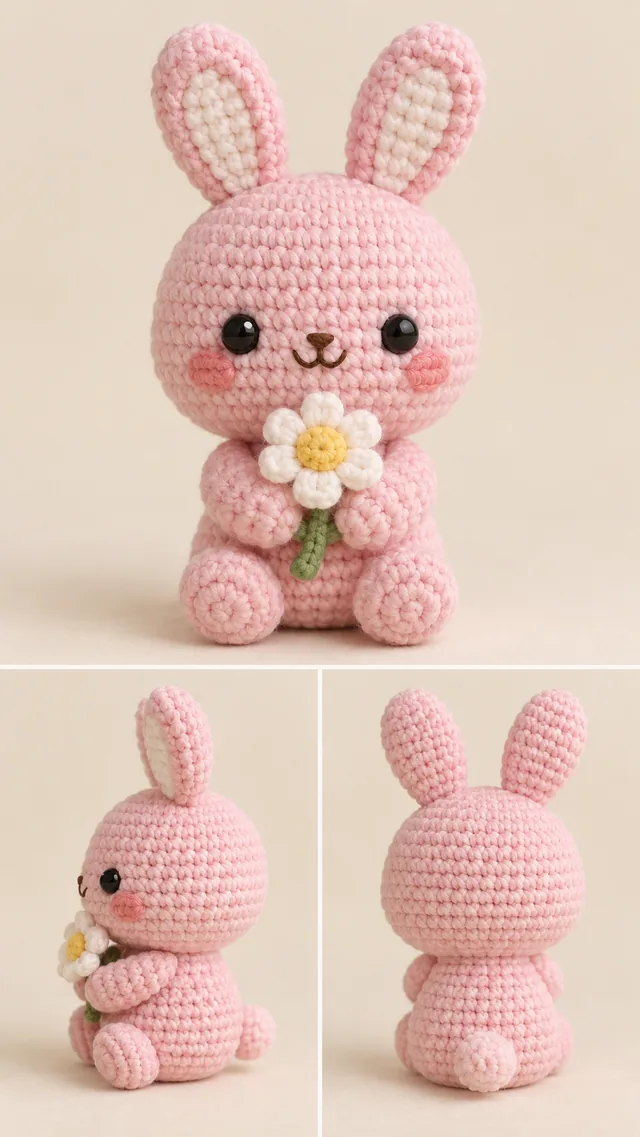
The daisy bunny is the sweetest figure of the five. A soft pink body with long upright ears, a cream muzzle and blushing cheeks sits with its paws wrapped around a single white daisy with a yellow center. Side and back views show the rounded body and the ears' clean silhouette.
The single flower is a study in restraint: one daisy, held at chest height, is all the decoration the bunny needs. The white and yellow of the flower echo the cream muzzle and add a fresh spring note to the pink palette. The daisy also gives the figure a gesture – offering – which the other upright plushes lack.
For a mood board, the bunny shows how one small natural prop can define a season. Swap the daisy for a tulip, a seashell or a autumn leaf and the same bunny moves through the calendar. The prop is the calendar; the body is the constant.
Compared with the frog-hat duckling, which wears a costume, the bunny simply holds something real. That keeps the bunny grounded and timeless. Both approaches are classic; choosing between them is choosing between dress-up and still life. The image is an AI-generated concept, inspiration only.
A duckling wearing a frog hat
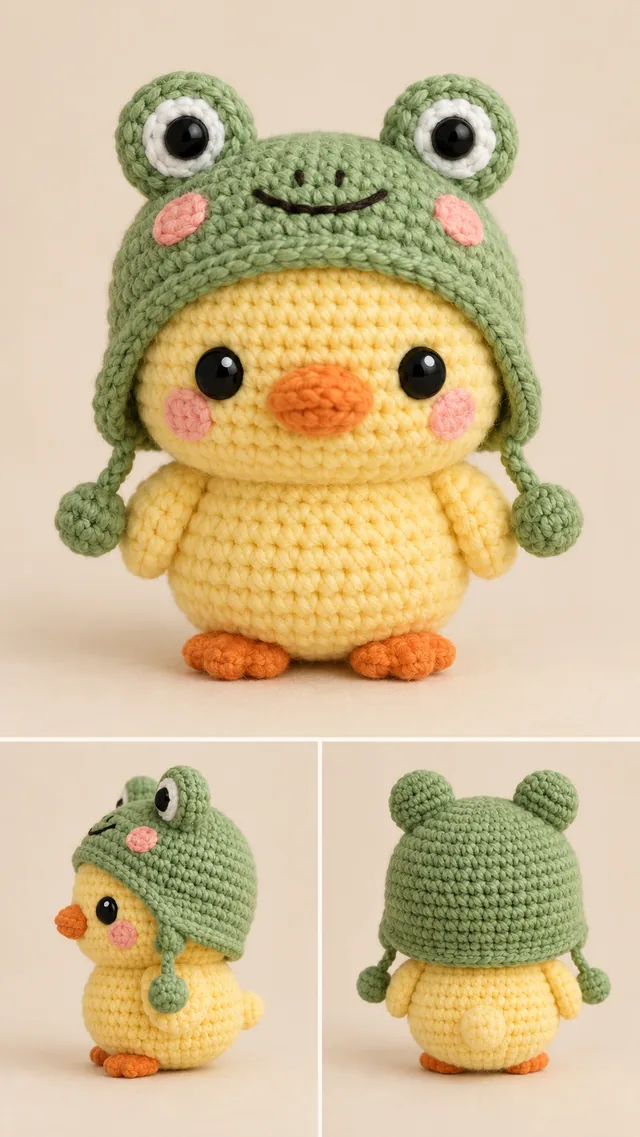
The frog-hat duckling is the most playful concept in the set. A round yellow duckling with an orange beak and rosy cheeks wears a green frog hat whose big eyes and stitched smile sit on top of the duckling's head, with little frog legs dangling at the sides. The hat covers most of the head, so the duckling's own eyes peek out from underneath.
The costume-hat formula stacks two animals into one figure, doubling the charm without doubling the complexity. The green hat against the yellow body is a fresh, springlike contrast, and the frog's dangling legs add movement to the silhouette. From the back, the hat reads as a rounded green cap with tiny feet.
For a mood board, the duckling demonstrates the costume hat as a repeatable device. A chick in a bunny hat, a bear in a pumpkin hat, a cat in a Santa hat – the base body stays the same while the hat carries the theme. This makes seasonal series easy to plan.
Set against the simply accessorized teddy, the duckling is fully costumed and theatrical. The two figures show the range from one bow to a full hat. Both are AI-generated concepts for inspiration, not photographs of finished pieces.
A fox wearing a cream scarf
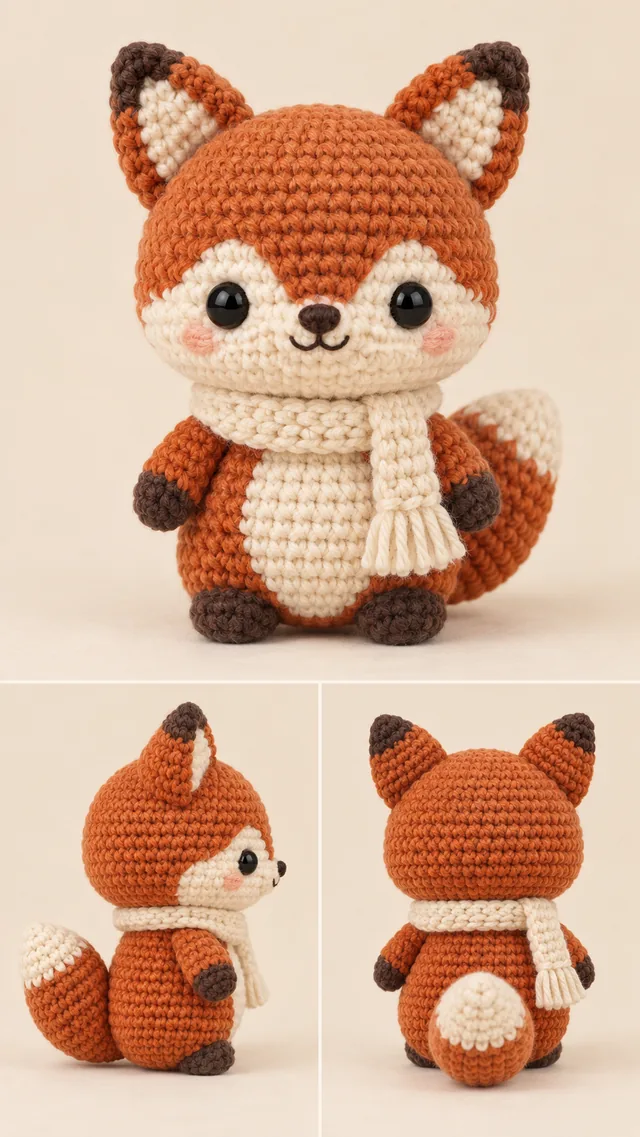
The scarf fox is the coziest figure of the five. An orange fox with a white muzzle and chest, dark brown ear tips and paws, and a big fluffy tail stands wrapped in a cream knitted scarf with fringed ends. Side and back views highlight the tail's white tip and the scarf's wraparound drape.
The scarf transforms the fox from a wild animal into a storybook friend. Cream against orange is a warm autumn pairing, and the scarf's fringe adds a textural detail that suits the yarn medium. The fox's pointed ears and masked face keep a hint of wildness that balances the cuteness.
For a mood board, the fox shows how a wearable accessory implies weather and season. Scarves mean autumn and winter; swapping in sunglasses or a flower crown shifts the same fox into summer. The body is seasonless; the accessory is the forecast.
Compared with the moon cat's dreamy stillness, the fox looks ready to step outside. The collection as a whole spans gift, dream, spring, play and autumn – five moods from five simple props. All images are AI-generated concepts for inspiration only, with no patterns or instructions.
One accessory, one story
The five plush figures share a single design principle: give a simple, well-proportioned animal one meaningful accessory and let that accessory tell the whole story. A bow makes a gift, a moon makes a lullaby, a daisy makes spring, a frog hat makes playtime and a scarf makes autumn.
When planning a classic amigurumi series, the practical sequence is body first, accessory second. Settle on one satisfying body construction and a consistent face style, then design a small wardrobe of swappable props. The consistency is what makes the series feel like a family.
All five images are AI-generated concept illustrations. They offer ideas for characters, palettes and accessory choices, but they are not photographs of finished crocheted pieces and include no patterns or instructions. Use them as a springboard for your own kawaii plush mood board.
Read how we present crochet inspiration or send a suggestion or correction.